What it is
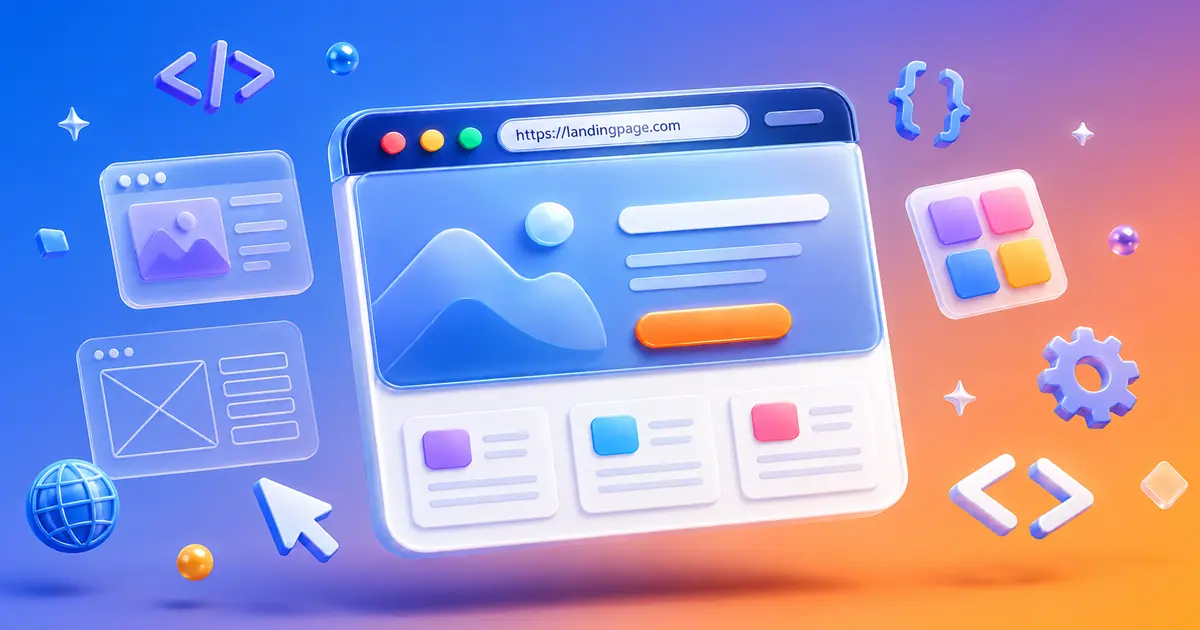
A landing page is a standalone web page created for one specific goal: selling a product, collecting leads or signups, or announcing an event. Visitors arrive from an ad, an email, or a link and see only what leads them toward that one action — no side menu, no other sections to wander into. It's a fundamentally different attention model than a regular website: instead of "explore whatever you want," a landing page walks the visitor down one set path toward one action.
That's the short landing page definition. The landing page elements below are what most such pages have in common, regardless of the goal.
A simple landing page structure
- Headline and subheadline. What this is and why it matters — clear within a few seconds, no scrolling required to figure that out.
- Benefit statement. What the visitor gets, not just a list of features or technical specs.
- Trust signals. Testimonials, client logos, a guarantee, or a concrete number — just enough to answer "can I actually trust these people."
- Call to action (CTA). One main button — "Order now", "Request a quote", "Subscribe" — with no other buttons competing for attention.
Common use cases
- Launching a new product. One page dedicated to a specific item or service, separate from the rest of a catalog or portfolio.
- Event or webinar registration. Date, speaker, the benefit of attending — and one registration form, nothing else.
- Lead magnet delivery. A checklist or guide in exchange for an email — the page exists for that one download.
- An ad campaign. Traffic from a specific ad lands on that exact offer, not on the homepage where people get lost in the menu.
How a landing page differs from a website
A website talks about a business as a whole and lets the visitor decide where to go next — sections, a menu, several possible paths. A landing page cuts one goal out of the whole business and builds the page entirely around it. That's why a landing page fits a specific offer or ad campaign best, while a full website makes sense when you need to show the full range of services and welcome an audience with different needs.
Need a landing page?
We'll build a page around your specific goal — from structure to launch.
For a deeper look at when a landing page fits better than a full site, and when it doesn't — see the blog article "What Is a Landing Page and How It Differs From a Website".
A landing page is often built specifically around a lead magnet — a free offer exchanged for a contact: in that case, the whole page is dedicated to one form and one promise, with nothing else competing for attention.
What makes a landing page actually work
A landing page works when the page has one clear offer and no competing calls to action — cards for other services or links to other sections just dilute the visitor's attention. The form should have exactly as many fields as the first step actually needs (a name and a contact, not a half-page questionnaire): every extra field costs submissions. And the page needs to load fast on mobile, since most traffic from ads and emails opens there first.