⚡ Summary
Website development runs through 6 steps: discovery → structure → design → build → content → testing and launch. A simple multi-page site is usually ready in 3–4 weeks, a bigger one in up to 2 months. The price depends less on design than on the number of pages and how complex the functionality is.
In the previous article we covered how a landing page differs from a website — and which clients actually need each format. Today we go one level deeper: if you do need a full website rather than a single page, what does building it actually involve, how long does it take, and what drives the price?
How website development differs from a landing page
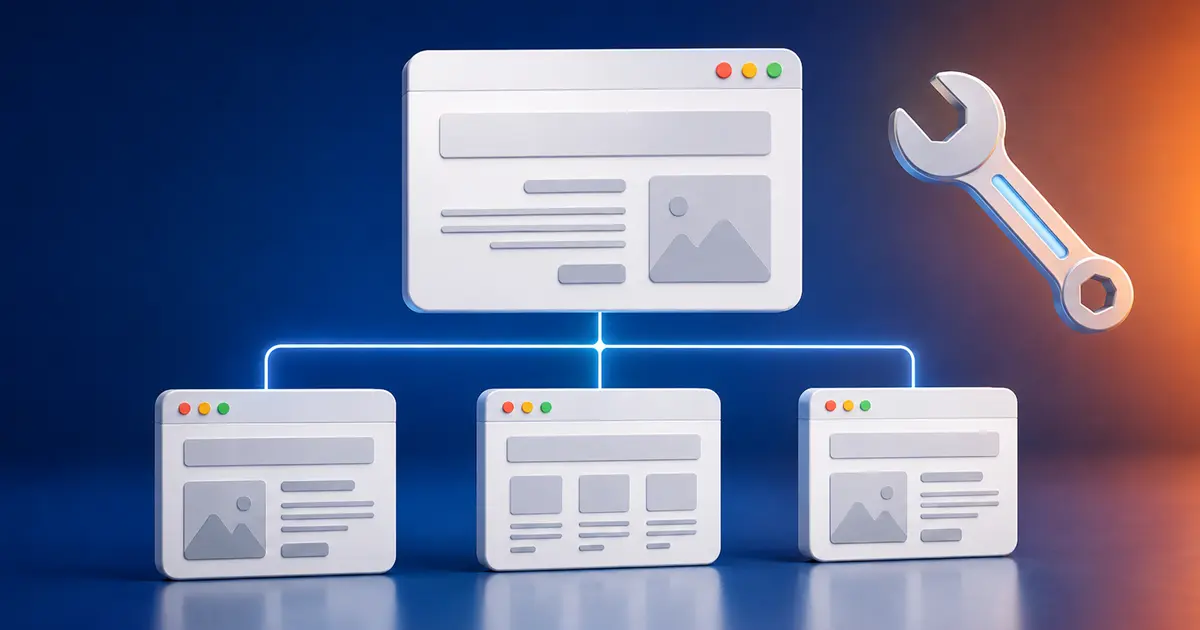
A landing page is a single page built around one goal. A website is a different job: several pages that together represent the business, not one offer. That means more structure (how the pages connect to each other), more content (each page needs its own text, not shared with the rest), and navigation that actually has to guide people somewhere. If you haven't decided which format fits, the difference is covered in more detail in the previous article.
How many pages your business actually needs
This is the first question worth answering honestly, before talking about design or budget at all.
The minimum set
For most small businesses, three pages are enough: Home (a short overview and the main call to action), Services (a detailed description of what you sell), and Contact (a form, address, messengers). That minimum already covers a basic online presence — people can find you, understand the offer, and reach out.
When you need a blog or a catalog
If you have several product categories, you need a catalog structured by category rather than one long list on a single page. If you're planning organic traffic from Google rather than relying only on ads, you need a blog: each article is its own page targeting a specific search query, and it keeps working for months after it's published. Without a blog, a site is limited to the traffic you pay for; with one, part of the traffic starts arriving on its own.
The stages of website development
Behind every finished website is the same set of stages, regardless of who builds it:
- Discovery and structure. A sitemap — which sections are needed and how they connect — before a single mockup exists.
- Design. The visual direction built for the brand: color, type, composition for each page.
- Build. The design becomes working code: responsive layout, forms, load speed.
- Content. Real text, photos, and prices on every page — not lorem ipsum you'll have to redo later.
- Testing. Checking across devices and browsers, making sure every form and link between pages works.
- Launch and basic setup. Domain, analytics, connecting forms to an inbox or CRM.
If reading this list makes you realize you actually have one offer and one goal, not several — a landing page might be enough instead: a shorter process, fewer stages, a faster launch.
Ready to start your project?
Tell us how many pages and sections your business needs — we'll scope the timeline and cost for your specific case.
How much website development costs
The most common mistake is assuming the price depends on the design. In reality it comes down to the number of pages (three pages and twelve are a different amount of copy, layouts, and build work) and how complex the functionality is (a simple contact form costs nothing like a filterable catalog or a client account). Two sites with equally good design can differ two or three times in price for exactly this reason. As a rough guide: a basic 3–5 page site sits in one budget range, a site with a blog or catalog at 10+ pages sits in another, higher one. You'll get an exact number for your own project after a short brief — not from a template price that ignores your actual scope.
How long it takes
A simple multi-page site with a standard structure is usually ready in 3–4 weeks. A bigger site — with a blog, a catalog, or non-standard functionality — can take up to 2 months. The timeline doesn't scale linearly with page count; it scales with how much unique content and logic each page carries. Ten similar catalog pages go faster than five pages that each need their own structure and forms.